Trump and Paul: A Way Forward
by John Dennis
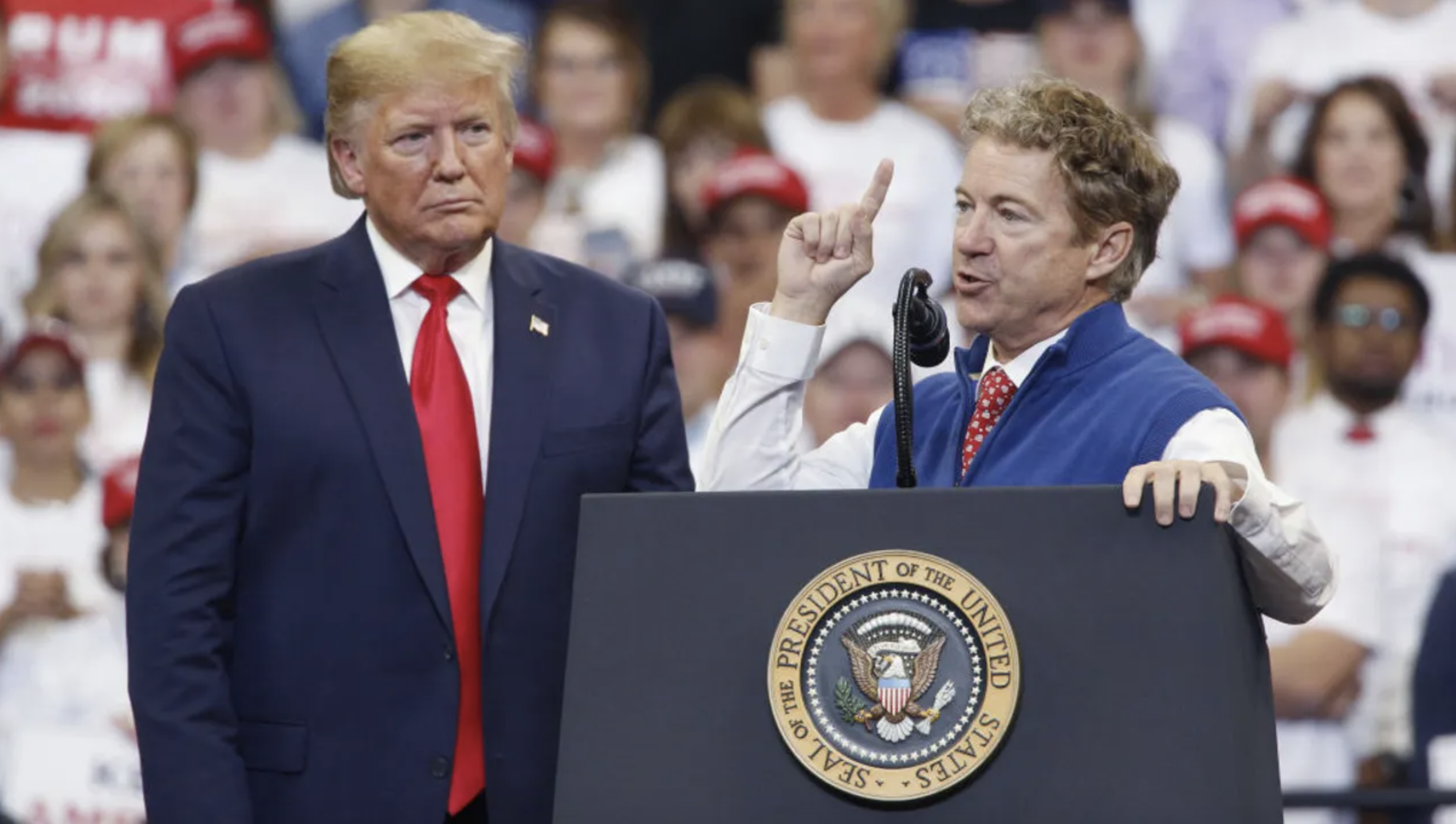
The fundamental distinction between Donald Trump and Rand Paul lies in the primary lens through which each views America’s challenges and priorities. For over four decades, Trump’s political motivation has centered on how foreign countries exploit the United States—economically through unfair trade practices and strategically via inadequate burden-sharing in defense alliances. This outward grievance has driven his consistent push for tariffs, renegotiated agreements, and an “America First” posture that reclaims advantages lost to global partners and rivals.
Trump first articulated this forcefully in September 1987, purchasing full-page ads in The New York Times, The Washington Post, and The Boston Globe. The ads declared: “For decades, Japan and other nations have been taking advantage of the United States,” criticizing allies for not paying enough for U.S. military protection and arguing that America subsidized competitors who then dominated U.S. markets. In 1988 and 1989 interviews, including on Oprah Winfrey’s show and the Morton Downey Jr. Show, Trump accused Japan of “beating the hell out of this country” economically and “systematically suck[ing] the blood out of America” while laughing at U.S. weakness. These complaints persisted through the 1990s and 2010s, expanding to China, Europe, and others “ripping us off.” During his presidencies and into 2025-2026, this has translated into aggressive tariffs—on steel, aluminum, and goods from multiple nations (e.g., 10-145% on various imports)—and demands that NATO allies meet spending targets or face consequences. Trump has framed these actions as ending decades of America being “looted, pillaged, raped and plundered by nations near and far,” withdrawing from international organizations to stop the exploitation.
Rand Paul, by contrast, focuses inward on how Washington exploits Americans through bloated bureaucracy, excessive spending, overreach in surveillance and criminal justice, and wasteful foreign commitments that burden taxpayers. As a libertarian-leaning senator, Paul’s priorities emphasize fiscal restraint, constitutional limits, reducing federal power, and protecting individual liberties at home. While he shares skepticism of endless wars and foreign aid—often holding up or criticizing Ukraine packages for lacking oversight, fueling inflation, and diverting resources from domestic needs like high gas and grocery prices—he frames these as symptoms of Washington’s internal excesses rather than primarily foreign freeloading. His efforts include blocking spending bills, pushing for transparency (e.g., on Fauci-related records), opposing executive overreach in areas like tariffs (which he calls unconstitutional taxes that raise prices for families), and advocating reforms like rescheduling marijuana to ease federal overcriminalization.
This core divergence—Trump’s external focus on confronting foreign exploitation versus Paul’s internal crusade against government overreach—has produced occasional friction. Recent examples include Paul’s criticisms of Trump’s tariffs as an “economic fallacy” that punishes consumers and erodes checks and balances, his introduction of bills requiring congressional approval for tariffs, and his opposition to aspects of Trump’s reconciliation “Big Beautiful Bill” and government funding packages over deficit concerns. On foreign policy, Paul has co-sponsored resolutions limiting unauthorized military actions (e.g., in Venezuela) and held firm against large-scale aid, sometimes aligning with restraint but clashing when Trump’s approach involves aggressive executive posture. Public exchanges have highlighted these tensions, with Trump occasionally accusing Paul of disloyalty and Paul defending his positions as principled constitutionalism.
Yet these priorities are not opposed—they are complementary within the broader America First framework. Trump’s outward-oriented confrontations—tariffs to deter unfair practices, demands for allied contributions, withdrawals from burdensome pacts—strengthen America’s leverage internationally, reducing the economic and strategic drains that Paul decries domestically. Paul’s inward reforms—slashing deficits, enforcing fiscal discipline, curbing bureaucratic excess, and insisting on congressional oversight—ensure that gains from Trump’s external policies aren’t squandered on endless spending, unnecessary entanglements, or big-government growth at home. Together, they address the full spectrum of threats: external actors weakening the U.S. abroad and internal overreach burdening citizens within.
Their working relationship demonstrates this synergy in action. Despite differences, Paul has described agreeing with Trump “far more than we disagree,” highlighting mutual support on non-interventionist instincts, avoiding unnecessary wars, and challenging establishment norms. Post-2024, Paul issued an enthusiastic endorsement in February 2025, admitting he was “wrong” to withhold it earlier, praising Trump’s cabinet picks, Ukraine stance (opposing escalation), and DOGE success—while maintaining honest disagreement on tariffs (“still a terrible idea”). Paul has defended constitutional principles without personal animosity, noting politics has “a bit of WWE in it” but affirming support on most issues. Trump, in his first term, called Paul reliable (“He’s never let me down”), and their interactions reflect a coalition dynamic where libertarian restraint tempers nationalist assertiveness.
In the fractious Republican landscape—spanning nationalists, libertarians, and interventionists—a functional partnership between Trump and Paul advances America First more robustly than either could alone. Trump’s bold external actions create negotiating power and deter exploitation; Paul’s domestic vigilance safeguards resources, enforces accountability, and prevents Washington from undermining victories through profligacy. This balance tempers aggressive policies with fiscal conservatism and constitutional restraint, fostering a stronger, more solvent, freer America.
Consider how reciprocity—the powerful human tendency to return favors—already operates here: Trump’s willingness to champion restraint-oriented policies (e.g., defunding globalist groups, opposing escalation abroad) reciprocates Paul’s principled stands, building goodwill. Liking plays a role too—both men share a mutual respect for bucking orthodoxy, with Paul praising Trump’s boldness and Trump appreciating Paul’s consistency. Social proof emerges in the growing Republican consensus that America First requires both external strength and internal discipline, as seen in widespread party support for their aligned efforts. Authority reinforces the case: Trump’s decades-long track record on trade grievances and Paul’s consistent libertarian advocacy lend credibility to the combined approach. Commitment and consistency drive their collaboration—once committed to America First, both men align actions accordingly, even amid disagreements. Finally, scarcity adds urgency: the window to reclaim U.S. advantages abroad while curbing domestic waste is limited—opportunities like tariff leverage or spending reforms won’t last forever if not seized together.
Their collaboration, built on shared skepticism of globalist overreach and a willingness to challenge norms, offers a model for the party’s future: outward strength paired with inward discipline. By embracing this complementary dynamic, Trump and Paul can deliver lasting prosperity and liberty for Americans first—proving that principled differences, when harnessed ethically, strengthen rather than divide.
John Dennis is the Chairman of the Republican Liberty Caucus. John has been an RLC member since 2010 and he has served on the RLC National Board since 2015.